My Pins

Thursday, November 11, 2010

Knit With Me 27

Garter Ridge
It doesn't look as special as some of the patterns we've been doing lately but I think the simple patterns, though they don't shine, are good for highlighting more intricate patterns.
Choose as many stitches as you like...
Row 1: K
Row 2: P
Row 3: K
Row 4: K
I think I'll choose the dark purple for this one

Tuesday, November 9, 2010

Modern Needlework in 600 pictures

I couldn't go past this find at the local op shop this week. It is from the 1930's and is almost like an anthropological look at womens' role in the home providing soft furnishings and clothing right down to underwear.
It has a heavy board cover and fabric spine and....well, a LOT of pictures. This would have been a very expensive book in it's time to produce with all the photos over 220 pages.
At first glance through I am fascinated by the myriad of techniques for hemming, button holing, seam finishing...

seam finishing

Much of the sewing is by hand and I find myself marveling at the time and patience and love that would be needed to complete an outfit in the 1930's. Hand sewing is making a comeback in some households but I for one think being able to machine neaten a seam is up there with sliced bread.
But these garments were meant to be worn for years....maybe some modifications for changing fashions, but certainly not the lightening speeds of fads and fancy that our fashion world dictates. The mouse wheel of consumerism does not make money if we are not buying into the latest fashions every season.
I know there are a lot of you out there who are lovers of the vintage. It's about the fabric and the decoration but I also know it's because you love the quality. Because you hand make yourselves, (sewing, crotchet, knit or otherwise) you have a great respect for every hand placed stitch.

trims and notions
Not only am I struck by how many techniques we have slowly lost over the generations of mechanisation and it's availability in the home, but also by the accoutrement's that we would no longer dream of doing ourselves.
The ric-rac style trims, ruffles, latticework trims and cording. Sometimes we might still make bias binding but mostly notions are all purchased items now.
Next I am struck by the changes now in our buying. Linen, napery, pajamas, lingerie....are usually purchased.

corsets and stay bodices

 Not that I am in total mourning for the "old" ways. I love the new fabrics and ways with underwear. I remember when I was little and had to wear those pure cotton bloomer type knickers to school. By the end of the day there was very little elasticity in the material and heaven help you if the elastic went in the top because that was all that was holding them on!
This book also tells the story of an era when laundering was more time consuming and garments were cared for.

dress preservers
Now we want to throw everything in the washing machine and dryer. Then garments were worn until they needed cleaning and were hung to air before putting away and sponging of spots.
It's no wonder the fabrics now wear out so quickly.
I haven't seen a dress preserver in years!
So I couldn't pass this book by. It reminded me of lost techniques and times before modern machinery was commonplace in the home. A time when quality and care meant things lasted and were not disposable.
So think back....before automatic washing machines, before home sewing machines and before the wonderful world of retailing for everything......
....and we think we are busy now! We don't even know we are alive!
If the world of petrol and electricity ground to a halt tomorrow, at least we still have books of reference like these....just in case.

Saturday, November 6, 2010

Meat and the Environment

I am not advocating either way for meat eating or vegetarian lifestyles.
The debate is about looking at our food eating habits as a whole.
I'm suggesting to take an approach that looks at the cause not the symptoms.
Balance not knee jerks.

I met an ambitious young man this week who is up and coming in his political party. He is vegetarian as he believes that the production of meat for consumption places huge environmental strains on the planet and has a negative impact.
This same young man also admits that he is not a good vegetarian and his diet consists of lots of processed and packaged foods and leans heavily towards grain based food. Doing the math here is difficult certainly to get a quantitative figure but I'm pretty sure it's an environmental impact trade off for yet another.
Not only is his diet heavily weighted with processed food, but he also has no idea about his local seasonal produce. So when he goes shopping he decides "I need fruit I'll have; watermelon, oranges and strawberries" (but it's the middle of winter)
So back up the truck here....the oranges are Californian and have been shipped from the other side of the world, the watermelon is totally out of season and so are the strawberries that have been artificially grown in heated sheds. The final horror is that the watermelon has been GM for a seedless variety so consumers don't have to worry about pesky seeds.
I've been vegetarian a couple of times in my life and I know how the body craves "fuel" and is not so easily appeased when there is no complex animal proteins to break down. You have to eat smart and you have to eat well.
The suggestion I put to you is that it is possible that while trying to negate an environmental impact on the planet with the abolition of one practice, you actually place a greater strain on it through other practices.
It seems to me his abstinence from meat was knee jerk.
We would be far better off educating about a more balanced and conscious consumption of food. Thinking about the real costs associated with what we eat.
We need to improve farming practices. Feeding our livestock properly would be a start....did you know that vast numbers of livestock in intensive farming situations are fed cheap corn? This was never meant to be their staple diet and they are not healthy on it.
The livestock industry is massive and growing but so is our population. Is it exponential? I don't know but it sure isn't rocket science to figure out that you can't keep producing more people and not have more food demands. Maybe globally we are going to have to look at population control. The world is like a petrie dish of ever expanding microbes. One day it's going to get ugly!
Here is one last little piece to add to this argument. The same people who argue that meat livestocks are taking up and ruining vast amounts of land are also the same people who happily purchase cashmere that has been produced in China because it is so cheap. To corner that market though, and to produce so cheaply, China's precious land is fast being turned to desert.
Don't despair! All of us have an impact and our very existence makes it inevitable. What I am saying is let's think about our actions on a broader level, weighing cause and effect, cure rather symptomatic relief.
I mean you wouldn't drive 100km away to fill up with fuel at petrol station X because they are always 4c/l cheaper....would you???
By all means eat less or no meat but be just as mindful of the environmental cost our other habits are responsible for.

Thursday, November 4, 2010

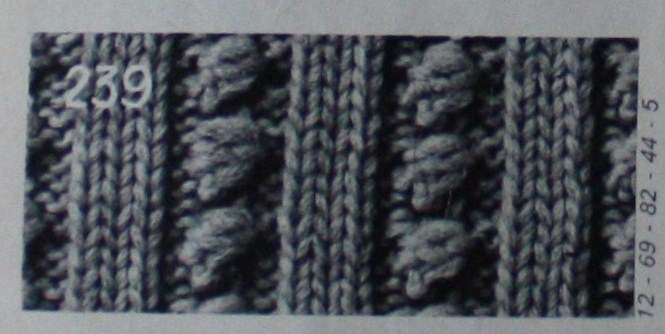
Knit With Me 26

Vertical Bobble
This is knit over 8+3 stitches. I'm casting on 43 stitches.

Row 1: *K3, P2, make bobble (p1, k1) twice into the next stitch then take the 2nd, 3rd and 4th sts over the 1st st, P2*, K3.
Row 2: P3, *K2, P1, K2,P3*
Row 3: *K3, P5*, K3
Row 4: As for row 2

This would be a great pattern for a teapot cosy or a hot water bottle cover. I'm sure there are plenty of people trying to think of Christmas gifts at the moment.

Monday, November 1, 2010

The Shot Tower

Craig and I headed South at the weekend for a visit with the girls and some adventures....
Just 11 km from Hobart in the suburb of Taroona is a familiar landmark to most Tasmanians. The shot tower was completed in 1870 from dressed sandstone blocks and is a 48 metre tapering structure built to manufacture the balls of shot for muskets etc. There is a spiral staircase of about 300 steps with a central shaft. The ingots of mixed metal were hauled to the top, re-melted in a furnace and then poured into a colander above the shaft. As the molten metal dripped through the holes, it formed into spherical shots as it plummeted to the vat of water below where it was shovelled out and sorted for size and quality.

It remained the tallest structure in Tasmania for over 100 years and was in use till 1905.
This climb is not for the faint hearted or those with a fear of heights (or spiders). About 95% of the stair treads flexed significantly and maybe I've watched too much TV but I could imagine only too well my foot going through one and hanging in mid air. Halfway up Tegan started having flashbacks to the time she really did fall down a stairwell and experienced mild panic and hyper-ventilation. Emma was only concerned that she was going to encounter a spider from the supremely ancient cobwebs ( really, that's taking preservation too far!)
The views from the top were stunning but it was blowing a gale and I really really needed a nervous pee so I couldn't enjoy it anyway.
When we got to the bottom, all three of us were trembling from our fingers to our toes. Craig, who knew his limitations with heights needed no more proof than the looks on our faces to validate his decision not to pay for the privilege of fright.

Friday, October 29, 2010

Smells I Miss


In Queensland we called these school ports (from portmanteau).
They were made from thick tough rigid cardboard and although they had a sort of "skin" on the outside to resist water, they were raw and exposed on the inside which meant smells were readily absorbed.
They always smelt of bananas, that was a given living in QLD, but the best smell for me was the smell of pencils, as pungent as fresh mown grass.
It smelt like I kept an inch of pencil shavings in there. Is it just me or have pencils lost their pungency? Were they actually toxic in my day and have they been homogenised for the new generations or are they now using plantation timbers and, like most things mass produced, bland?


Oil of Ulan (Olay in other countries) is not a particularly preferred smell but it does conjure childhood memories for me. Mostly it brings to mind grandmothers. I remember when I was little, hefting that cool heavy glass bottle in my hand. You had to be careful not to drop it when you were very small because heavy glass bottles get slippery when handling moisturisers. The texture like cool water on the skin, the smell unique, exotic but not simpering like I remember the Avon ones. It was so cosmetic but not chemical. It also reminds me of arched eyebrows like Sophia Loren's.


I miss the smell of real paper money. I understand the reasons for the conversion to the polymer (thingy-whatever) equivalent, but I really feel sorry for the younger generations that they never got to really experience money. Now days they barely even carry it. Nearly every transaction is done with a card.
Is that where we went wrong with societies so overburdened with debt? Did we get far too removed from our currency?
Once upon a time proper money was put into little buff envelopes and distributed on pay day. A set amount that had to last. It had to be budgeted.
It left a lingering gorgeous smell even after it was gone. I remember inhaling the scent like I do a fine red wine now. I wish I had kept a wad of it just to smell occasionally. The couple of notes that I have "for the children" aren't quite the same effect, their smell now a bit dulled and distant.
So it begs the question, what was the alluring smell of money? Certainly it was ink and paper, but was it also the intricate melding of thousands of hands?
It is argued that currency is one of the trademarks of civilisation. Our currency is very quickly turning into an intangible source. What will future historians make of a civilisation that abandoned it's currency. It's interesting to note that back in the day a lot of Sci-Fi drama used the term "credits" instead of "dollars" and how true that is coming to pass. It's not hard to imagine that one day we will have a global currency of "credits"....but I digress.
One can bring to mind favourite smells but as I grow older there are a lot of smells I miss, the ordinary everyday smells I took for granted and will never smell again....unless I come across an old kindy port in someones "attic" as I am convinced you can never get the banana smell out of them.
What are your smells you miss?

Thursday, October 28, 2010

Ravalry Fun

I have been busily stitching tea towels all week and isn't it always the way that it never rains it pours! While trying to get a store order done I've had a record number of single orders this week too.
My monthly meet up at the pub with some Ravalry knitting buddies was just the distraction I needed.
Such a diverse group of girls and so much fun. We talk about so many things like; family, work, travel....and especially knitting.
I learnt some new terminology. When someone asked Jess what she was working on she replied "a neck warmer"(click link to see the "Fear of Commitment Cowl by Julie Weisenberger at Ravalry). In all my ignorance I burst out laughing and said surely that was called a scarf!
Well no there is a difference. A neck warmer is literally a smallish piece for a stylish drape once around the neck like an informal collar.
The next new term I learnt was "a commitment free button" to which I positively bubbled over with mirth as I tried to cope with images of shy and aloof closure options. Once I got up off the floor it was patiently explained to me the ingeniousness of it's design.
Two buttons are joined with a short length of elastic and are able to be worked through a largish knit pattern effectively securing the garment in a variety of ways as you will see if you click on the neck warmer link above.
I love it! Jess has just the button in mind for her project too. Her friend brought her back a beautiful button from Prague when she was travelling. What an imaginative and thoughtful present and so easily transported.
Related Posts Plugin for WordPress, Blogger...