My Pins

Showing posts with label herbs. Show all posts

Saturday, October 8, 2016

Hungry Gap - Fennel


The hungry gap is that period between late winter and early spring when you've harvested most everything you've been over-wintering and the new season abundance hasn't kicked in yet.

Fennel planted in mid to late summer can be that fresh burst of flavour that enlivens your plate with exciting flavour and you don't need a lot, just a few sowings will do.


We've been harvesting the fennel over the last four weeks, eating it baked with simple olive oil basting or my favourite way - in salads. I've even been harvesting some of the ferny, feathery tops for a subtle aniseed flavour in omelettes and steamy hot buttery, potatoes.


Sorry, no foodie shots. more of an after thought really.
I love the fennel finely shredded with some finely sliced cabbage and a fruit like; chopped mandarin, sliced orange or finely sliced yellow delicious apple. All these ingredients are seasonally available and at their peak now and they go together so sublimely.
What about some lovely winter Tasmanian walnuts from their shell and lightly roasted with pickings of parsley and mint. Finely shredded "spring" onion (onions plantings not quite ripe and ready in big bulb form) added for a bit of zing.
Simply dressed with Tasmanian olive oil drizzled over with a splash of white wine vinegar or a squeeze of winter abundant lemon juice.


There is nothing nicer at the end of winter than some alive and fresh flavours from the garden. Plan for the hungry gap and feel blessed with abundance all year round.

Tuesday, February 16, 2016

Tools Of The Trade


A beautiful find this old tool box.
A bit of a clean up, a little light sand, not too much as I want to preserve it's integrity and some nourishing oil.
Over the years it may find many uses but for this next incarnation....


it's holding MY tools of trade!


And rolling pins are so beautiful why would you hide them away!
I have the original little turned one my mother had starting out and a French taper of maple, a massive Huon pine roller up for the biggest jobs and tiny Indian roti rollers.
The perfect spot for seasonally abundant herbs, handy for happy cooking.


Thursday, November 5, 2015

The Edible Perennial Beds


In just two short months we are already harvesting from the edible perennial beds. You could be too, it really doesn't take that much space and you could be eating fresh salad greens most of the year round.


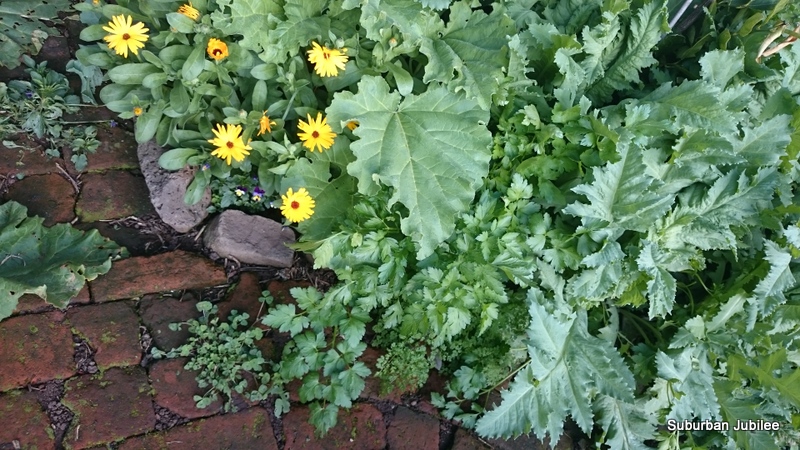
Attractive landscaping can also be achieved using edible perennials and I have roughly mapped out a plan for the planting. I plan for the green beds to contain lots of lime coloured herbs and lettuces. Over towards the back I have transplanted my Tahitian lime tree to take advantage of the protected corner and the heat bank of brick paving. The red beds will contain, well, red themed plantings.


Red Beds
Bloody dock with it's spectacular veined leaves and a real favourite in our salads. Red rhubarb and red chard, strawberries, lettuce variety "trout back"and "red oak" and purple flowering oregano rosenkuppel.

Green Beds
Lettuce varieties "lollo bionde" and green oak, green stemmed rhubarb, chervil, salad burnett with it's fresh cucumber flavour, lovage for a celery flavour and parsley. My lime tree will be the piece de resistance but it will have to have a lot of seaweed foliar sprays over the summer to harden it for winters here in town. 

As the season progresses other herbs and leaf will probably come and go and the hollyhocks will provide height for the birdhouse that is situated in the middle. You could add an asparagus crown or two to your perennials. The advantage of growing the loose leaf lettuce varieties is that they can be picked and picked rather than the hearted varieties that reach maturity and then are gone.


So get cracking, you may not have room for a corn crop but you could be selecting gourmet salad in just a month or two and living like kings.

Footnote: The paths are made from convict bricks and the edges from salvaged stone, both come from the ruined cottage from the bottom of the paddock.

Friday, November 21, 2014

A Tisane For Cold & Cough


This is about as flash as I can be this week.
When I feel the hint of sickness lurking near my respiratory tract I take a dose of elderberry tincture straight away and knock it on the head. Now we are in spring and my supplies are all gone after sharing with lots of family in need this year and I am watching the flowers covetously planning a bigger bottle up for the still room.

I did find this calico bag of dried berries that I had stashed having never got around to tincturing them. The stem and seeds are emetic so it is important to remove them; adding vomiting and diarrhoea to your woes would be disastrous. Take the dried berries into your palm and clap your other palm over the top and move them gently together in circles. The stems will quickly and easily separate and if you do this action holding your palms vertically the stems will even fall away so you don't even have to winnow. 

I steep the elder berries in a tea pot with a stainless steel strainer (non reactive to food acids and alkaline) and give them a light press and stir after they have re-hydrated. The fine mesh holds back the seeds. I also add sage and thyme fresh picked from the garden but you can also use them from dried form. Both of these herbs are known to aid coughs, sore throats and irritated and inflamed linings. They also have anti-septic and anti-viral properties. 

It really is well worth planting beyond the basil and parsley and reading and extending your knowledge of herbs. I do stress the thorough reading and researching too, just because something is natural doesn't mean it can be treated casually. There is powerful medicine in plants and it is well to know their effects especially if you are on medication or have pre-existing disease.

I wish you good health.

Sunday, October 12, 2014

Spring Rice Paper Wraps - Breaking the Basil Bias


I once again came home with a basket full of greens from the market, many of them herbs.
Every year at this time people will come to the market and peruse the array of fresh seasonal vegetables of spring and ask...

"Do you have any basil?"

I aim to educate and explain, basil is a summer herb, it's not in season yet but there are all these herbs, fresh and ready now...


Today at market I had parsley, sage, thyme, mint, lovage, Vietnamese mint and salad burnet.
But you know what?
People just don't know what to do with them, let alone rejoice in them!

So here is what you could have made with those amazing fresh flavours...


Rice Paper Wraps
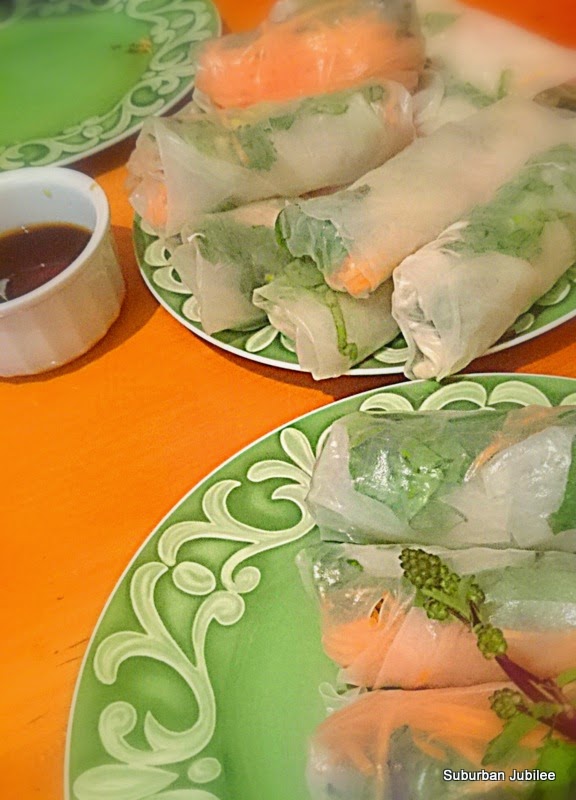
So fresh and easy, these really are "spring rolls". Some left over cold chicken shredded and carrot mixed with some of those greens above in the top picture all wrapped up in a rice paper round.
Tender spinach and beetroot tops were finely sliced and the leaves pulled from the Asian greens. Salad burnet adds a cucumber flavour and a welcome addition when cucumbers aren't in season. The lovage leaf brings the flavour of celery but in its soft leafy form it is ideal for including in the wrap. The flowers from the Asian greens taste of a mild nutty brassica-ish-ness.


Serve with a dipping sauce of soy, mirin and lemon juice.

No we don't have basil until summer comes but there is a lot of herbs to rejoice in in the spring season. Perhaps we need some of these chefs-superstars on commercial TV to put down the basil and start sharing some more ideas with home cooks about other herb delights.


Friday, October 10, 2014

Wild Nettle Cordial


Stinging Nettles are perfect and tender, ready for picking right now (here is Tas anyway)
Use gloves and long sleeves so the irritating hairs don't sting you. If you do happen to get stung cast your eye around for dock, it usually always grows where nettles do. Crush the stem and leaf and apply the moist mash, it works almost instantly. If you can't find dock, go for plantain.

Young nettle tops can be made into pesto, ravioli filling, soup and many people enjoy it as a simple tea. Nettle tea in your kombucha brew is so yummy. Nettles are power packed with nutrition and health benefits and a much better choice for a "cleanse" than some of the more extreme methods. A cup of nettle tea every morning for a couple of weeks will move your winter body into a revitalised state. A word of warning though, it can lower blood sugar and blood pressure so if you are already on medication for those complaints then you should only use nettle medicinally under supervision.

You know me though, I can't resist a cordial experiment.


Most of the recipes I found suggested steeping/fermenting for a week. I thought that was not necessary for nettles. I simmered a huge bunch of tender leaves with 2 litres of water for at least half an hour. It was an amazing rich green colour. After straining I added 100g of sugar for every 100ml of liquid, stirring over a low heat to dissolve. Most cordial recipes also add citric acid (from lemons) for preserving and erring on the side of caution I added about 50g and I was horrified to see my gorgeous green liquid turn brackish brown. You live and learn. All you chemists out there are probably nodding your heads sagely. 

I have found some great cocktails that call for nettle syrup (here and here)but you can also just enjoy it in a punch or in a long glass of soda water. Great splashed in a Pimms too I should imagine.

Do google and read up on nettles, they are an amazing plant and perfect for a novice forager as it can be harvested in meaningful culinary quantities easily and is very versatile. You could even substitute for spinach in the pasta like I did last weekend.
Do share if you have a favourite way with nettles.

Friday, October 3, 2014

Nesting Box Herbs


We have eight chooks and lately they have all taken to laying in just one of the nesting boxes. Not such a problem over the slower winter months when they slowed production but they were coming back into lay so it was time for a schoojsh up.

I cleaned out the old nesting material and re-filled with some shredded paper from the office and then a gorgeous downy layer of poodle hair (don't laugh, they love it; soft and insulating) and then I strewed the neglected nest with dried herbs.

They love it!
I use huon pine shavings for a natural insect repellent and also include dried calendula, mint, oregano, wormwood, lavender and rose petals. 
I'll also have the mix at market, enough for two boxes for $7


( Note; wormwood is thought to bring on uterine contractions and is recommended to be avoided by pregnant humans and animals. I find most animals will instinctively eat and poultry particularly will self medicate with wormwood for worm control as required. I've heard goats aren't so discerning so keep it away from gestating does.)


Tuesday, September 16, 2014

Home Foraging


This weekend it looked like the field and woodland fairies had visited my kitchen.
The calendula has started flowering its head off again and I find so many uses for this flower. It is wonderful for skin healing is the basis for many of my salves and soaps.
A friend visited and swapped some magnificent field mushrooms for some kombucha SCOBY and milk keffir grains.
I gently dug some more solomon seal roots/rhizome for another salve I am making for ligament, tendon and cartilage. 
I found some lush plantain, also good for skin salves.


And I am still collecting pocketfuls of delicious cape gooseberries.
Lots of the simple things that make me feel abundant.


Sunday, August 17, 2014

Dinner Party For Under $15


By late winter the garden has really slowed and most of the food out there is really what you would call "in cold storage". We are still eating like kings though and last night we had a long overdue dinner party with good friends pulling most of the ingredients from the garden.


Setting a glamorous table need not set you back a small fortune either. My silver cutlery is a crazy set of mis-matched patterns but is shines prettily on a second hand lace cloth. Piece by piece it can be bought for just a couple of dollars from second hand shops. Good white napery always looks elegant and these too I picked up at a second hand shop and a good soak in Napi-san works wonders.


So for starters, how about a good old crowd pleaser, Potato and Leek soup. Anybody can make this and it is cheap as chips and leeks are in the garden now. To serve drop small dots of single cream from a teaspoon and then run the spoon through it lightly to create swirls. This soup used two medium potatoes and a couple of leeks from the garden and home made vegetable stock so the cost was probably something ridiculous like .70 cents. Even if you bought your veg it would still only cost a couple of dollars.


For main course I made Chicken Pot Pies.
I gently simmered two chicken breasts in a pan of water with some celery tops, one small onion and the carrot ends from three carrots. I removed the chicken and discarded the celery tops and carrot ends and added the sliced carrot and cooked till they were softened but still bright and not falling apart. I strained the stock and kept aside in a jug and added the veg to the shredded chicken breast in the fridge.


Next I caramelised some thickly sliced mushrooms in butter then added about a quarter of a cup of vermouth and a heaped tablespoon of the seeded mustard that I had made at the fermentation class last month and simmered till all the liquid was gone.


The next step is to make a basic white sauce using the reduced stock from before for added flavour and then mixing in all the chicken, veg, mushrooms. You could use asparagus, corn, whatever, so many combinations. Spoon the mixture into individual pie dishes or like I do, use these versatile 1 cup ramekins. Leave about 1-2cm headspace. Find a bowl or saucer to trace around on a sheet of puff pastry so that it gives you a circle a couple of cm larger than your pie pot. Brush the top rim and and edge of your ramekin and place the puff pastry on top securing the overhang down the sides, the egg will "stick" it. Snip six small slits in the top.
These are baked for about 25-30mins in a mod-hot oven and when cooked they will be golden and you'll see a bit of the sauce bubbling at the slitted vents. I can't give you an exact costing but definitely under $12.


Simply serve your pot pie on a dinner plate with a salad accompaniment. 
Our salad was purely foraged from the backyard and I have Lee from Killiecrankie Farm Nursery to thank for it. She has taught me so much about perennial edibles. The salad comprises of leaf from Perpetual Spinach, the gorgeously veined Bloody Dock, young Asian green leaf, celery flavoured  lovage leaf , tiny cucumbery tasting Salad Burnett, tiny micro leaves from the mint just starting to make a comeback because of a lovely sunny week here. I've sliced half a pear thinly and added tangy sweet Cape Gooseberries and then strewn it with Calendula petals.


Cost - next to nothing. It's amazing what you can find in a garden in the hungry gap. The Cape Gooseberries are frost tender but they have been cleverly planted in a sheltered corner near the house brickwork and the close boughs of the lemon tree also afford some protection. They make a welcome addition at this time of year when other fruits seem so far away in next season.


And now for dessert!
Junket infused with Bay Leaf and topped with Baked Rhubarb.

Our rhubarb is on the return again and I was able to pick about five lovely stalks. Wash and trim into 2cm pieces and place in a small baking dish with about 1/4 cup of sugar. Cover with foil and bake at 160C for about 20 mins. Cool and set aside for serving. 

To make the junket, I placed two fresh bay leaves (everyone should have one in a pot) into a saucepan with 1 1/2 cups of milk and a tabs of sugar and gently heated it, stirring to dissolve the sugar and removing it from the heat just before boiling. Discard the bay leaves and allow to cool. Add 1/2 cup of cream and re-heat to lukewarm and add your crushed junket tablet or junket powder mixed in a tabs of cold milk. Stir through and pour into bowls and leave to set for about 20 mins before putting them into the fridge to chill.


Junket takes me right back to childhood though the bay leaf infusion lends a sophistication to this simple dessert, and stewed rhubarb is also an old fashioned memory so for a bit of whimsy I set the junket into Bunnykins porringers. The bottom of the plate patterns are all different and as in childhood, everyone had to eat to the bottom of the plate to see what pattern they got.


These were the spoons we had in childhood too and I thought they were just right for a bunny bowl dessert!
Total cost about $1.50

So a three course dinner for four people cost us under $15 leaving plenty in the budget for a nice bottle of wine. The recipes were easy and made use of seasonal produce and could be done ahead of time allowing me to simply serve and garnish. Oh I also forgot, I made dinner rolls too from a basic bread dough and they simply went into the oven 20 mins before we sat down to soup so they were nice and hot and crusty.


Dining out sometimes is lovely but you can save yourself squillions and you can play whatever music you like when you entertain at home. Go on, revive the dinner party.




Saturday, August 16, 2014

Tasmanian Bush Food


I'm sort of on holidays and was lucky enough to be able to go along to a talk organised by the Tamar Natural Resource Management about Tasmanian bush food. We met in the beautiful Punchbowl Reserve, yet another stunning natural feature right in the heart of our city; I don't think we realise how lucky we are.


The talk was given by Kris Shaffer, a keen propagator and user of bush food, her knowledge has been honed by a lifetime of reading and research. She is also an artist and is deeply in tune with the spiritual nature of her environment and the dreamtime of the aboriginal people. 


She set a lovely table display and included some of the mainland bush foods in her talk as well. Displayed here on an emu skin is an emu egg, an abalone shell and ringed all around scallop shells containing seeds, pepper berries, wild rice, flowers, leaf tips and other berries; useful for flavouring but not sustaining. Much laboratory research however is going into the potential medicinal properties of some of these edibles.


Here the ripe purple/blue oval fruit of  Billardiera longiflora, may be used in jam but not particularly edible raw. 


We ground some native Tasmanian pepperberries and I have written a post here previously about using the berries and leaf here. (Kris gave little information about them other than they can be used for flavouring) They are hot, as you would imagine, and have a smoky spiciness. A male and female plant are required for berries so if you are purchasing plants make sure this requirement is met. I think they make a nice addition to the garden as a shrub and can be kept well trimmed in size. 
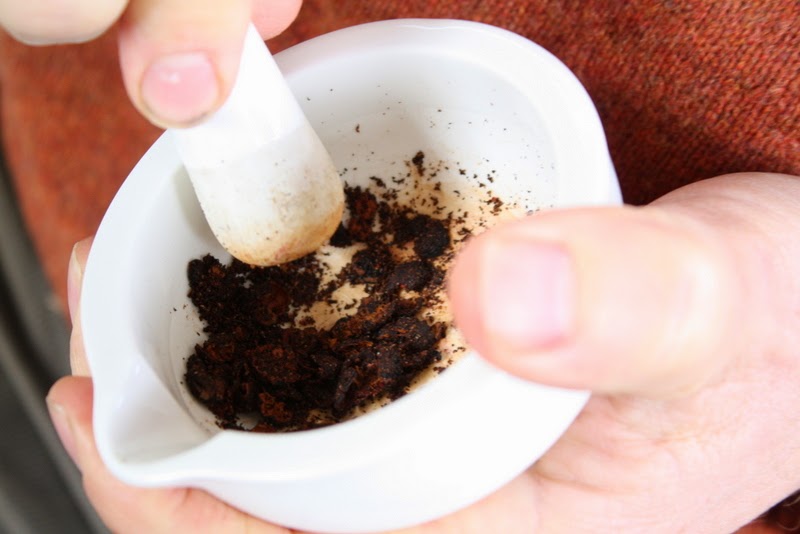
In the very first collage it is wattle seed being ground in the mortar. Again, we were not given information about the species and were warned that the extraneous matter inside the seed pod could be carcinogenic.


Above left was a loaf of bread that Kris made flavoured with leaf tips from Baeckea gunniana. I tasted a tiny piece of leaf and experienced a very pungent strong flavour. My immediate impression was that it would provide a high yield of essential oils and I got an impression of medicinal qualities for chests, anti-fungal, antiseptic - just impressions. No doubt more lab work is being done on this. Also next to the bread is some bunya nut seeds from the mainland. We used to eat these in QLD, steamed or baked (pierce the shell first!), hot with butter. They are starchy and potatoey with a delicate sweet nuttiness. They grow on very large Bunya trees in big cones like a giant pine cone. When ripe they drop to the ground and we delighted if we ever found some. Many of the trees have been removed as the danger from the dropping cones in public spaces could kill someone and unfortunately though some have been planted in Tasmania, I have never seen one bear fruit here.


Even the waterway running through the gulley that is part of the Punchbowl Reserve had edibles. The green long flat ribbon leafed foliage comes from an edible tuber that tastes like potato chips. It grows prolifically but I didn't catch the name of it.

Kris spoke beautifully and spiritually, showing us continually the connection between all of nature. Looking at the signs and deeper meanings that bind all things together. Harmony is to be found in the way that plants generate, what the animals eat and in their turn propagate. She showed a close interconnection between season and place. However, much of the Pallawa people's knowledge has been lost in the last 200 years of colonisation and people like Kris are gathering, researching and rediscovering. There is also money going into research, potential in commercial crops being looked at, delegations going to China with proposals and talk of intellectual property rights being protected. 

We learnt a lot but I felt it was more warm and fuzzy PR than anything specific. We didn't learn about propagation, harvesting, gleaning, cooking, nutrition or medicine. I accept the warnings about potential poisoning and that some foods are safe only after processing or at certain times but that to me is what education safeguards against. As a person who shares a lot of food knowledge I find the concept of food being intellectual property a bit unsettling. I do however believe that the aboriginal community can be relied upon to place a significant emphasis on sustainability and I would welcome any new commercial venture for the Tasmanian economy.


Kris often referred to the book "Land of the Sleeping Gods" and it sounds like interesting reading and I'm putting it on my list.
And check out Kris's Mariner shell necklace


You can read about Mariner necklaces in my post here.

Saturday, June 28, 2014

Additional Salve Making Information


Last Thursday we had a salve making session at our Living Better With Less group.
I have a general instructional 
There were however some other questions and answers that came out of the session that I thought would be helpful to list here.

Our recipe on the night was calendula, rose hip, plantain and chamomile infused oil.

  • It's a good idea to make a diary note when making something like a salve or any kind of preserve because you can go back and reference quantities, date, personal notes on effectiveness of infusion and ingredient preferences.
  •  You can use fresh or dried herbs and plant material. If using fresh make sure they are free from dew or moisture before placing in the oil to avoid your batch going mouldy.
  • We advised researching the efficacies of plants before using them and making your salve with conscious intent. For instance; comfrey is an amazing fast healer BUT you don't want to use it in cases of open wounds as it can heal SO quickly that it may heal infection within the wound and even may hamper the edges of a wound from effectively building a knitted skin repair by healing the edges rather than a knitted closed wound. It can also be liver toxic in large quantities and is not recommended for small children so we would not recommend it in a nappy cream for instance. By all means though, a comfrey salve for strained gardeners' backs or sprained ankles is marvellous and particularly helpful on broken bones. So choose your purpose and then pick your plants to tailor make your salve to suit. For another example; you could add essential oils of eucalyptus, cedar, mint for a vaporising chest rub for colds and congestion.
  • A word on essential oils - go easy! Just because something is natural doesn't make it safe for everyone, for instance lavender is one of the most common sensitivities. The commercial world has convinced us that everything has to "smell nice" but not everything has to be perfumed. Give your nose a break. When you ditch a lot of the chemicals and scented products from your life you will find your nose has re-adjusted and become sensitive to nuances again. Only add essential oils for a specific purpose that meets your intent.
  • Rosehips contain very fine fibrous irritating "hairs". They can be infused whole but I believe it is more effective to chop them. By hand this is a laborious job and I suggest a closed lidded food processor. Adding oil will also keep fibres contained so they don't become airborne.
  • The beeswax will dissolve evenly and quickly into the oil at a low temperature if it is grated. You can source small pelleted beeswax from craft suppliers but I prefer to buy from local honey makers so it is usually in a chunk or a bar and needs to be grated. This is a bit laborious too and I've made just about all the mistakes for you. If you try chopping/grating in a food processor, the spinning blades create enough heat to melt the wax slightly so after a couple of seconds you have a small amount grated and a quantity stuck to the blades stopping them from any further cutting/grating. You could use your microplane but it will blunt the blades quite quickly. I find a grater used for cheese, carrots etc is the best method. Another in the group said she melts her beeswax and pours it into the oil which you would also need to have warmed so the two will mix and blend. Six of one and half a dozen as far as washing up mess goes so I may try the melt and mix method next time as I do make in a quantities that require grating 100g plus.
  • Here in the north of Tasmania you can source your beeswax from The Honey Farm in Chudleigh or The Tasmanian Honey Co in Perth (Tas)
  •  Speaking of washing up. A good rubber/silicon spatula will ensure you get the sides of pots etc really scraped down cleanly and then I advise wiping out the warm pot with a piece of paper towel to remove extra residue before washing up.
If you think of other questions let me know and I will edit and add. If you have anything other experiences you would like to share please add them in the comments below. Please also feel free to add a url in your comment if you would like to direct people to a relevant post you have made about slave making as shared experiences are learned experiences. (Note; any advertising and non-relevant material will be deleted)

*************************
As always, none of my posts are intended as medical advice but merely a description of what we discussed and did. If you have any medical concerns you should always defer to your naturopath or doctor for their advice.


Monday, June 23, 2014

Ravioli - A Frugal Meal


While the oven was on all day Sunday I also roasted off the cut pumpkin (see previous post here) and a small portion was devoted to ravioli for dinner the next night. And I really do mean small, a little goes a long way with ravioli.
I googled hoping to find something inspirationally different but was confronted with a hundred recipes for sage and burnt butter sauce....and do you know what....
I couldn't think of anything that does go better with pumpkin ravioli, it's like a law!


So I'm not going to give you a recipe like every other except to say that the pumpkin was roasted with a tiny sprinkle of my home grown and incredibly pungent in it's freshness caraway seed. It was then mashed with feta and lemon myrtle leaf and freshly grated nutmeg. You can simply chose your own aromatics and make it your own. After simmering the ravioli for a few minutes, drain and toss in a pan of "burnt" butter. For the burnt butter I add a large knob of butter and a sloosh of olive oil to allow more leeway in temperature and I add slivered fresh garlic and sage leaves and allow to brown. Simple, nutty, aromatic and perfect with pumpkin.

What I will say is that making your own pasta saves you squillions and makes for a luscious meal even if you don't have backyard chickens. If you do have your own chickens then your pasta will have a bright yellow like mine form those gorgeous free range eggs and if you harvested pumpkins from the compost heap like we did, the cost is next to nix, just some flour.


Would I make this with three little ones under the age of five? Probably not. It does take some time in the kitchen but if you are wanting to spend some quality talk time with a partner or older child, bonus!
I use ordinary flour and generally I use a ratio of one egg for every 100g of flour and the flour component is 1 part fine semolina to 2 parts plain flour. 
A pasta maker can be an investment but it can also be a waste of money if you don't get it out regularly, and that's the key; get it out fortnightly or at least monthly and make lasagne or spaghetti and it soon becomes an enjoyable habit. There is no substitute for fresh pasta and when you compare the costing you will find yourself making very tasty yet incredibly frugal meals.

****************
REMEMBER
NEVER!!! Wash your pasta maker!
Simply dust it off and brush loose pieces free with a pastry brush.
***************


Sunday, May 18, 2014

Autumn Preserves


Summer preserving is a mad time but I would have to say that autumn is the same, if not, it at least comes a close second. In the autumn my preserving comes from some cultivated crops like chillies, lemongrass and various herbs both culinary and medicinal but it also comes from foraged plants too like rosehips and hawberries and plantain and late red clover.


When I moved into my house nearly 30 years ago, there was a hook in the corner of the ceiling in the dinning room. I suspect it was from a macramĂ© hanging of the 1980's and rather than deal with a hole I left the hook and painted it inconspicuous white. I'm so glad I did and I can't tell you how often I use it. Once I got past the "my home should look like the pages of Home Beautiful" stage and actually started to live in my home, I started drying my herbs here because the heating tends to get a bit trapped towards the ceiling here and it makes it perfect for drying. At the moment I am drying large bundles of wormwood in flower. If you can get hold of one of these old fashioned onion, shallot, garlic keeping hangers of collapsible hanging baskets do so; currently my beans are finishing off here for dried beans but I use it often for curing my soaps too. 


Here I am stripping and storing previously hung wormwood. This will be made into nesting box potpourri for the chickens and also insect repelling sachets for the linens and storage cupboards.
The jar behind contains the rose hips that I foraged the other day. Having them dried and stored means I can use them for salve making or tincturing or cordial another day when they are needed. I might even use them hot glued on a Christmas wreath!


I'm collecting seeds and podding dried beans and making dried teas. Above is the head of a Giant Russian sunflower and the purple king beans dried and ready, also a bunch of dried lemongrass that has been air drying. The lemongrass has been chopped in the Thermomix and is now ready for herbal tea blends and adding to tub teas.
The dehydrator is great for small herbs and holds the colour beautifully. I'm drying oregano, calendula, mint and parsley. These ingredients will be used when needed for meals, salve and soap making and herbal blends for bath, body and chickens! There is still so much to be gleaned and harvested.
Drying
another important preserving technique.


Related Posts Plugin for WordPress, Blogger...